Speech Therapy is a specialized healthcare service focused on the evaluation, diagnosis, treatment, and prevention of speech, language, communication, voice, swallowing, and cognitive-communication disorders in children and adults. Speech therapists help individuals improve their ability to communicate effectively, understand language, express thoughts clearly, and overcome speech and language difficulties that impact daily life.
At Hear & Speak India, our speech therapy services address a wide range of conditions, including speech delay, language delay, autism spectrum disorder (ASD), ADHD, stammering (stuttering), articulation disorders, voice disorders, social communication difficulties, cognitive-communication disorders, swallowing disorders (dysphagia), developmental language disorders, and speech difficulties following stroke or neurological conditions.
At Hear & Speak India, we provide comprehensive Stroke Rehabilitation and Dementia Therapy services designed to improve communication, cognitive abilities, swallowing function, memory, independence, and overall quality of life. Our multidisciplinary rehabilitation approach helps individuals recover lost skills, maximize functional abilities, and regain confidence after neurological conditions.
Our team of experienced rehabilitation professionals offers personalized treatment programs for patients affected by stroke, dementia, Parkinson’s disease, traumatic brain injury, neurological disorders, cognitive decline, memory impairment, and communication difficulties.
A stroke can affect speech, language, cognition, swallowing, balance, mobility, and daily living activities. Early intervention and structured rehabilitation can significantly improve recovery outcomes.
✅ Speech and Language Therapy for Stroke Survivors
✅ Aphasia Assessment and Treatment
✅ Dysarthria (Slurred Speech) Management
✅ Cognitive-Communication Rehabilitation
✅ Swallowing Therapy (Dysphagia Management)
✅ Memory and Attention Training
✅ Executive Function Rehabilitation
✅ Voice and Communication Therapy
✅ Home-Based Stroke Rehabilitation Programs
✅ Caregiver Training and Counseling
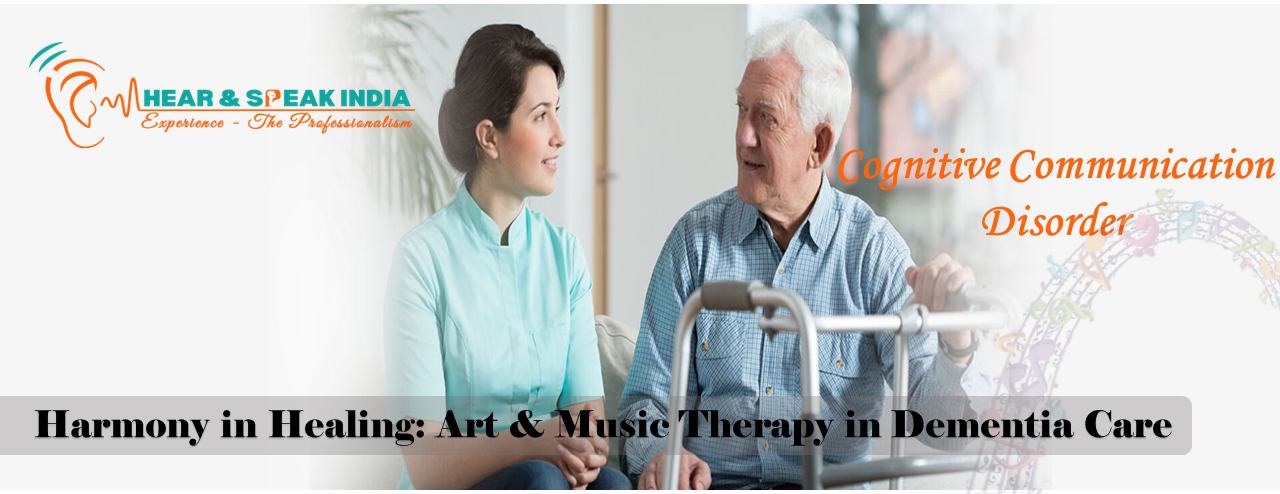
Dementia affects memory, communication, thinking abilities, behavior, and daily functioning. Our dementia therapy programs focus on maintaining cognitive skills, improving communication, and enhancing independence for as long as possible.
✅ Cognitive Stimulation Therapy
✅ Memory Enhancement Programs
✅ Communication Skills Training
✅ Language Therapy for Dementia
✅ Behavioral Management Strategies
✅ Attention and Problem-Solving Training
✅ Executive Function Training
✅ Caregiver Education and Support
✅ Activities for Cognitive Engagement
✅ Swallowing and Feeding Management
Early intervention and personalized approaches can significantly impact the effectiveness of dementia therapy.

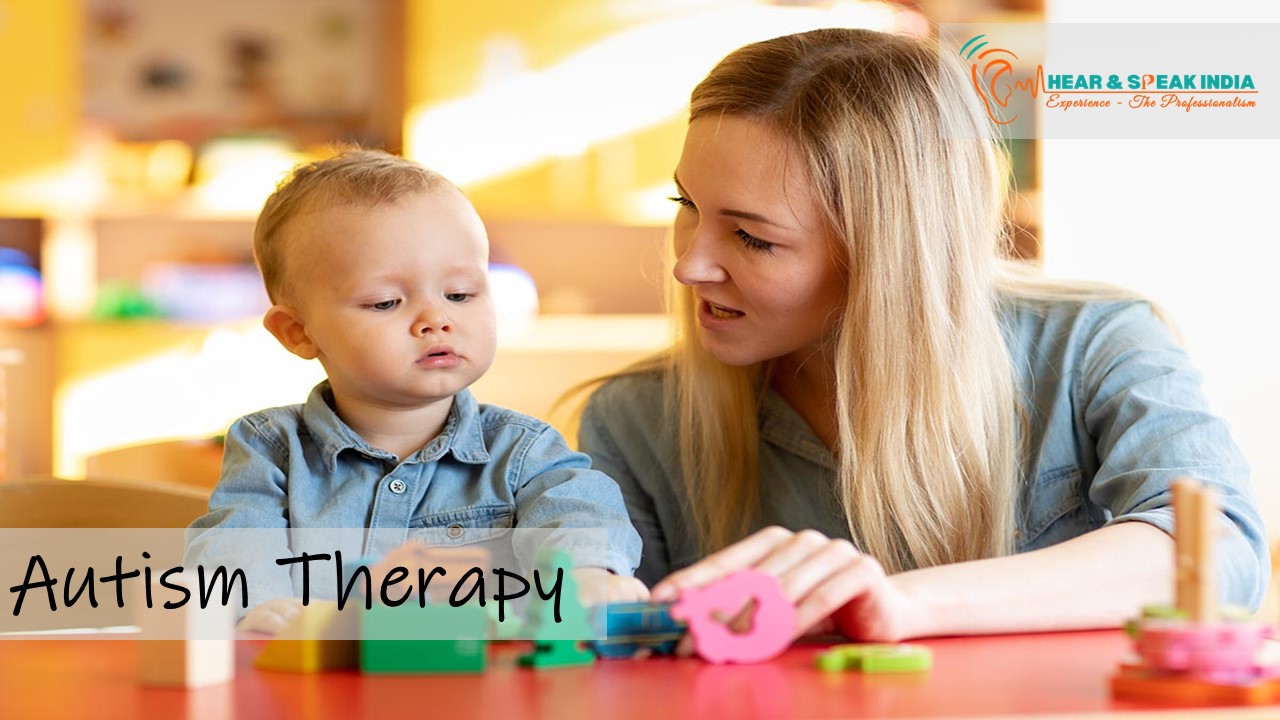
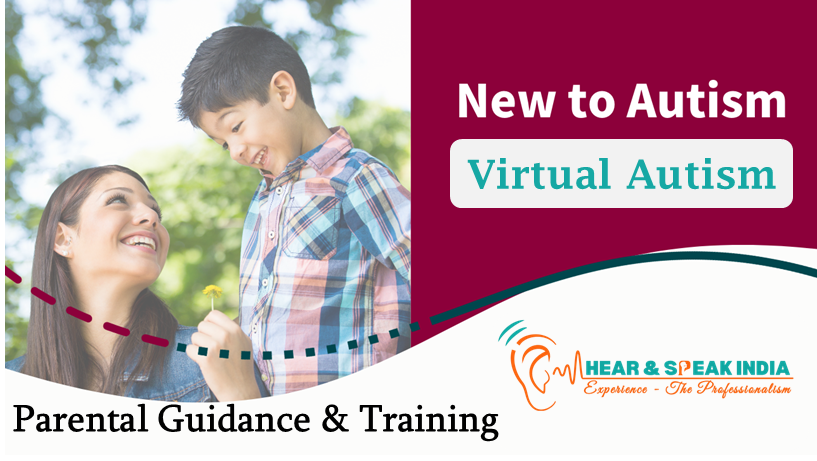
At Hear & Speak India, we provide comprehensive, evidence-based Autism Therapy Services to help children develop communication, social, behavioral, sensory, learning, and daily living skills. Our multidisciplinary team works closely with children and families to create individualized therapy programs that support meaningful progress and long-term development.
Autism Spectrum Disorder (ASD) affects communication, social interaction, behavior, sensory processing, and learning. Early identification and intervention can significantly improve a child’s ability to communicate, learn, interact, and participate in everyday activities.
Autism Spectrum Disorder is a neurodevelopmental condition that affects how a child communicates, interacts socially, processes sensory information, and responds to their environment. Every child with autism is unique and may have different strengths and challenges.
Our speech therapists help children improve:
ABA Therapy focuses on:
Occupational therapy helps children:
Our sensory integration programs help children:
Behavioral intervention focuses on:
Special education programs help children:
We guide parents and caregivers with practical strategies to support communication, behavior, learning, and social development at home.
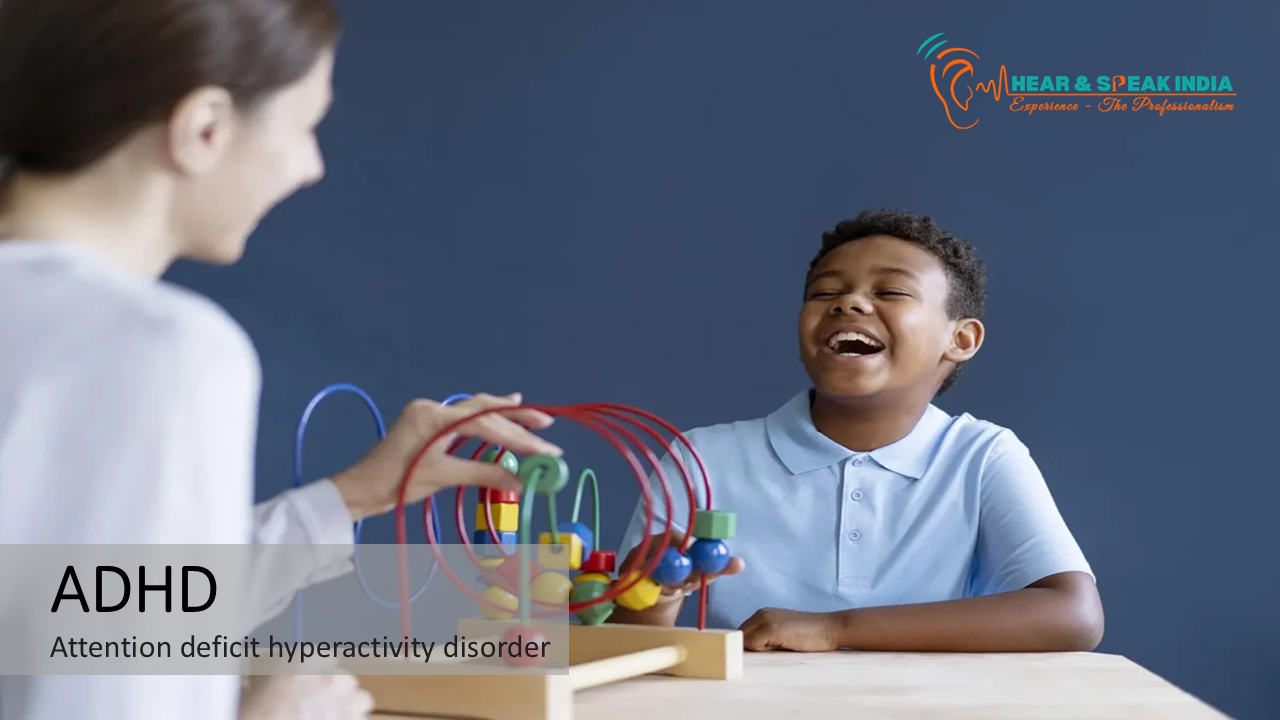
ADHD is a mental health condition that can cause unusual levels of hyperactivity and impulsive behaviors. Children with ADHD may have a hard time focusing on a single task or sitting still for a long period of time.
It can also disrupt executive functioning ability, which helps people evaluate and execute more complex situations.
There is a wide range of behaviors associated with ADHD. Some of the most common symptoms are:
Having trouble focusing or concentrating on tasks
Being forgetful about certain tasks
Being easily distracted
Talking excessively
Interrupting others when they’re carrying out a task
Making frequent mistakes or missing details while they’re studying or working
Losing items frequently
Having trouble organizing daily tasks
Types of ADHD
Predominantly inattentive. People with this type of ADHD have extreme difficulty focusing, finishing tasks, and following instructions.
Predominantly hyperactive-impulsive. People with this type primarily have hyperactive-impulsive behavior, like fidgeting, interrupting people, and not being able to wait their turn.
Combined hyperactive-impulsive and inattentive. People with this type of ADHD have a combined display of inattentive and hyperactive-impulsive behaviors. This may include an inability to pay attention, a tendency toward impulsiveness, and above-average levels of energy and activity.
Cognitive therapy is a goal-oriented, evidence-based approach to mental health treatment. It focuses on identifying and changing negative thought patterns, behaviors, and coping mechanisms that contribute to mental health issues.
Through collaborative efforts with a trained/certified therapist, individuals learn practical skills and strategies to:
– Recognize and challenge distorted or unhelpful thinking
– Manage emotions and behaviors more effectively
– Develop healthier relationships and communication skills
– Improve problem-solving and coping abilities
– Enhance overall well-being and resilience
Cognitive therapy is effective in addressing various mental health conditions, including anxiety, depression, trauma, Stroke, Aphasia, Learning Disability and many more. By empowering individuals with new insights and skills, cognitive therapy promotes lasting positive change and improved mental health.
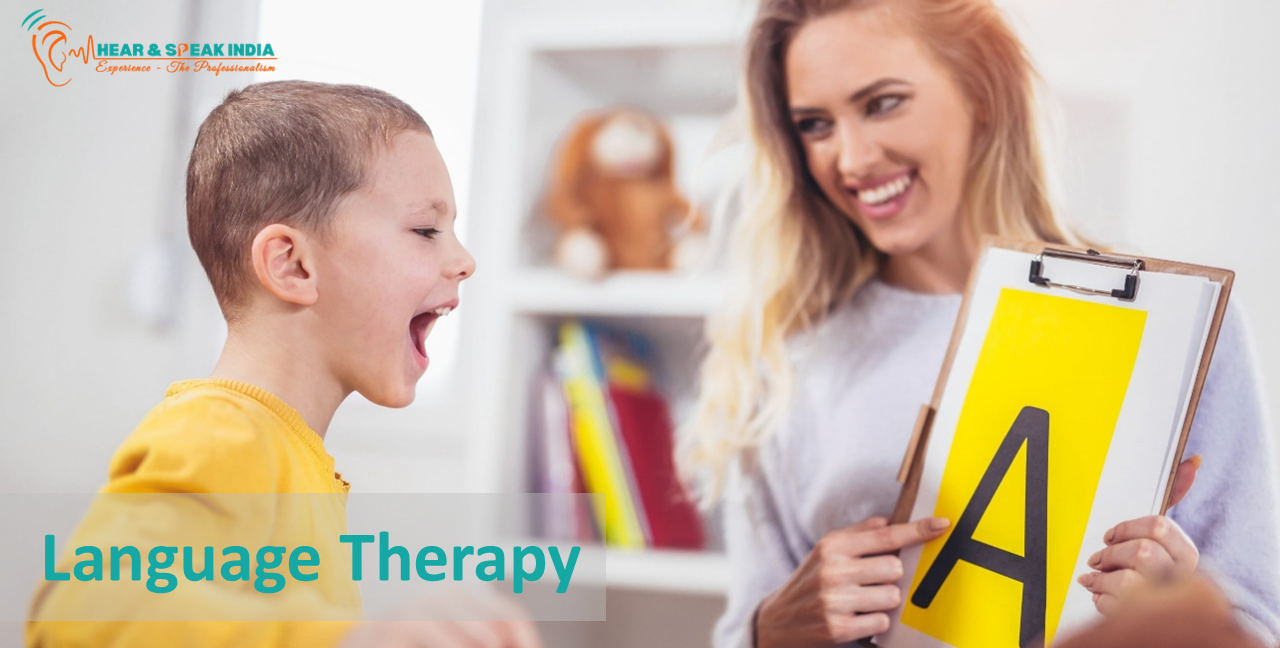
Language Therapy is a specialized service provided by qualified Speech-Language Pathologists (SLPs) to assess, diagnose, and treat language, communication, and speech disorders in children and adults. At Hear & Speak India, our evidence-based language therapy programs help individuals develop effective communication skills, improve social interactions, enhance academic performance, and increase confidence in daily life.
Whether a child is experiencing delayed speech and language development or an adult is recovering from a stroke, our experienced speech therapists create personalized treatment plans to achieve meaningful communication outcomes.
Language therapy focuses on improving an individual’s ability to understand, process, express, and use language effectively. Language difficulties can affect speaking, listening, reading, writing, learning, and social communication. Early intervention and professional therapy can significantly improve communication skills and quality of life.
Our language therapy services are available for children, adolescents, adults, and elderly individuals experiencing speech and language challenges.
Children who are not meeting age-appropriate communication milestones may benefit from early language intervention to improve vocabulary, sentence formation, comprehension, and communication skills.
Aphasia is a language disorder commonly caused by stroke, traumatic brain injury, or neurological conditions. Therapy helps individuals regain speaking, understanding, reading, and writing abilities.
Dysarthria causes difficulty producing clear speech due to weakness or paralysis of speech muscles. Language and speech therapy improve speech clarity and communication effectiveness.
Apraxia affects the brain’s ability to plan and coordinate speech movements. Specialized therapy helps improve speech production and communication skills.
Individuals with language processing difficulties may struggle to understand spoken information, follow instructions, or express thoughts effectively. Therapy strengthens comprehension and communication abilities.
Language therapy helps expand vocabulary, improve word retrieval, and enhance expressive language skills for children and adults.
Structured intervention helps individuals develop age-appropriate grammar, sentence formation, and language organization skills.
Therapy focuses on conversation skills, turn-taking, maintaining topics, understanding non-verbal cues, and effective social interaction.
Language intervention supports literacy development, reading comprehension, spelling, written expression, and academic performance.
Professional accent modification programs help individuals improve speech clarity and communication confidence in academic and professional settings.
A Parent-Infant Program (PIP) is an early intervention service that supports the development of infants (0-3 years) with developmental delays, disabilities, or at risk of delays. The program focuses on empowering parents and caregivers to enhance their child’s cognitive, social-emotional, language, and physical development.
Key components of a Parent-Infant Program:
1. Family-centered approach: Involves parents/caregivers in the intervention process.
2. Home-based sessions: Therapists visit the family’s home to provide support.
3. Coaching and guidance: Therapists coach parents/caregivers on strategies to promote development.
4. Play-based interventions: Activities are designed to be fun and engaging for infants.
5. Goal-oriented: Families and therapists set goals together to address specific needs.
6. Interdisciplinary team: May include speech therapists, occupational therapists, physical therapists, and developmental specialists.
PIP aims to:
1. Enhance parent-infant interaction and bonding
2. Foster a nurturing environment for development
3. Promote healthy development and minimize delays
4. Support parents/caregivers in understanding their infant’s needs
5. Connect families with community resources and services
By supporting parents and caregivers, Parent-Infant Programs help infants build a strong foundation for future growth, development, and success.
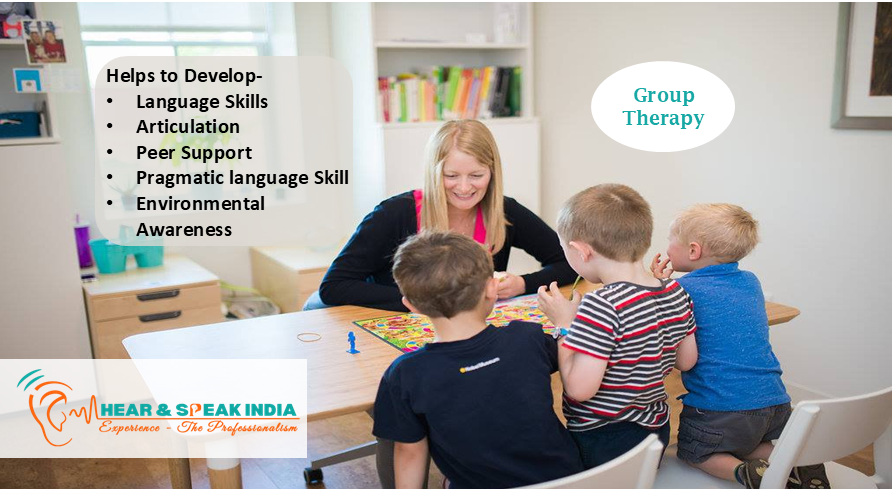
Group Therapy is an evidence-based intervention approach where individuals with similar communication, speech, language, social, or developmental goals participate in structured therapy sessions under the guidance of qualified therapists. At Hear & Speak India, our Group Therapy programs provide a supportive and interactive environment that helps children and adults develop communication skills, social interaction, confidence, and functional independence.
Group therapy encourages participants to practice real-life communication, improve social relationships, develop teamwork skills, and learn from peer interactions in a safe and motivating setting.
Our group therapy programs are designed for individuals with:
Participants learn to express thoughts, ask questions, engage in conversations, and improve overall communication abilities.
Group activities help individuals develop social awareness, friendship skills, turn-taking, eye contact, and appropriate social behavior.
Regular participation encourages self-expression and boosts confidence in social and academic settings.
Children and adults learn collaboration, problem-solving, sharing, and group participation skills.
Unlike individual therapy, group sessions simulate everyday social situations, helping participants apply learned skills effectively.
Observing and interacting with peers can enhance motivation, engagement, and skill development.
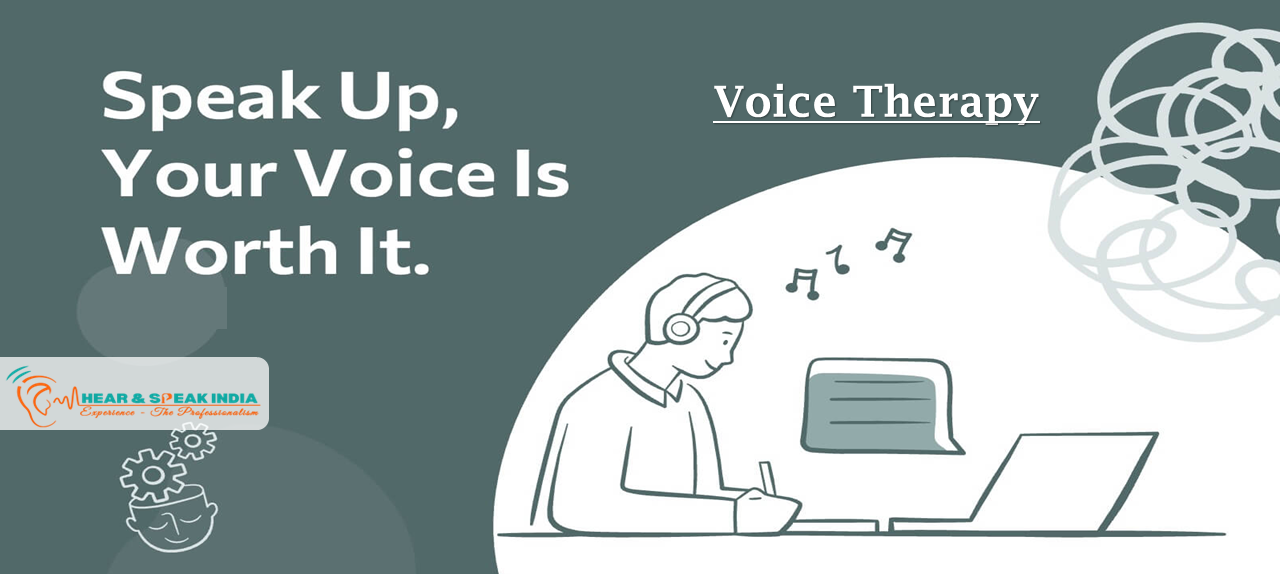
Voice Therapy is a specialized treatment provided by qualified Speech-Language Pathologists (SLPs) to assess, diagnose, and manage voice disorders that affect the quality, pitch, loudness, and overall function of the voice. At Hear & Speak India, we offer evidence-based voice therapy programs designed to help individuals restore healthy voice production, improve vocal endurance, and communicate confidently in their personal and professional lives.
Whether your voice sounds hoarse, strained, breathy, weak, or you experience vocal fatigue, our expert therapists provide personalized treatment plans to improve vocal health and communication effectiveness.
Voice therapy is a non-surgical treatment approach that focuses on improving vocal function through specialized exercises, vocal hygiene education, breathing techniques, and behavioral modifications. It is often recommended for individuals experiencing voice difficulties due to vocal misuse, medical conditions, neurological disorders, or professional voice demands.
Our comprehensive voice therapy services are suitable for children, adults, teachers, singers, public speakers, call center professionals, and individuals recovering from medical conditions affecting the voice.
Persistent hoarseness, rough voice quality, or vocal strain can significantly impact communication and professional performance.
Voice therapy helps reduce vocal misuse and supports recovery from benign vocal fold lesions.
Treatment focuses on improving breathing patterns, voice production, and reducing symptoms affecting vocal performance.
Therapy helps reduce excessive tension in the vocal muscles and promotes efficient voice production.
Individuals who use their voice extensively often experience tiredness, reduced vocal endurance, and discomfort. Therapy improves vocal stamina and efficiency.
Specialized voice rehabilitation techniques help improve vocal strength and communication ability.
Voice therapy can assist individuals with Parkinson’s disease, stroke, traumatic brain injury, and other neurological conditions affecting speech and voice.
Teachers, singers, lawyers, sales professionals, religious leaders, and public speakers benefit from preventive voice training and vocal performance enhancement.
Enhances clarity, strength, and natural voice production.
Teaches healthy voice techniques to prevent damage and fatigue.
Improves effectiveness in social, academic, and professional settings.
Helps individuals speak longer without discomfort or fatigue.
Promotes healthy vocal habits and long-term vocal wellness.
Supports teachers, singers, executives, and other voice professionals in maintaining optimal vocal function.